Understanding Beam Angles in COB LED Strips: 180° vs. Traditional 120°
When choosing LED strip lights for home decoration, commercial lighting, or architectural projects, most people focus on brightness, color temperature, and power consumption. However, one important factor that is often overlooked is the beam angle.
The beam angle determines how widely light spreads from the LED strip. It directly affects the appearance of the illuminated area, the softness of the lighting effect, and whether dark spots or uneven brightness appear.
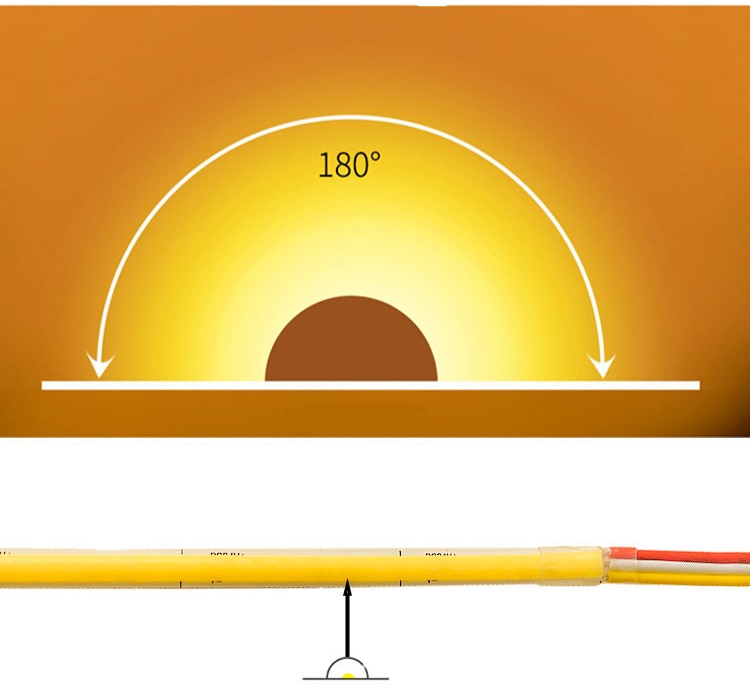
With the development of COB LED strip technology, many modern LED strips now offer a wider 180° beam angle, compared with the traditional 120° beam angle commonly found in standard SMD LED strips.
So, what is the difference between 180° and 120° beam angles? Which one is better for your lighting project? This guide explains everything you need to know.
What Is the Beam Angle of an LED Strip?
The beam angle refers to the spread of light emitted from an LED light source.
A narrower beam angle concentrates light in a smaller area, creating stronger brightness in a specific direction. A wider beam angle distributes light more evenly across a larger area.
For LED strips, beam angle affects:
· Light coverage
· Brightness uniformity
· Shadow effects
· Installation distance
· Overall visual comfort
Understanding beam angle helps you choose the right LED strip for different applications, whether it is accent lighting, cabinet lighting, ceiling illumination, or commercial displays.
Traditional 120° LED Strip Beam Angle Explained
Most traditional SMD LED strips use LEDs mounted on the surface of a flexible PCB. These individual LED chips usually provide a beam angle of around 120 degrees.
A 120° beam angle works well in many applications, especially when the LED strip is installed inside aluminum channels with diffusers or hidden behind furniture.
However, there are some limitations.
Because the light spreads mainly upward and outward, areas outside the main lighting direction may receive less illumination. This can sometimes create:
· Uneven brightness
· Visible light points
· Darker edges
· Stronger shadows
For example, when a traditional LED strip is installed under a kitchen cabinet without a diffuser, the lighting may appear brighter directly below the strip but weaker further away.
How COB LED Strips Achieve a 180° Beam Angle
COB LED strips use a different structure compared with traditional SMD LED strips.
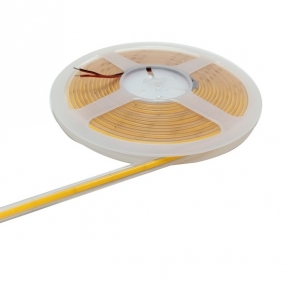
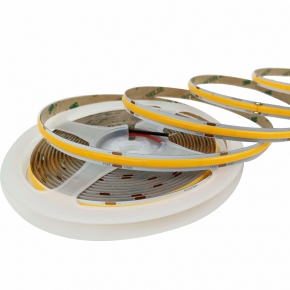
Instead of placing separate LED packages at intervals, COB technology integrates many LED chips directly onto the circuit board. This creates a continuous light-emitting surface and allows light to spread more naturally.
Many COB LED strips can achieve approximately 180° beam angles, producing wider and softer illumination.
The advantages of this wider beam angle include:
· More uniform light distribution
· Reduced shadows
· Better edge illumination
· Smoother visual appearance
This is one reason COB LED strips are becoming increasingly popular in modern interior lighting designs.
180° vs. 120° Beam Angle: Key Differences
Feature | COB LED Strip (180°) | Traditional LED Strip (120°) |
Light spread | Wider and softer | More directional |
Light uniformity | Excellent | Depends on installation |
Visible LED dots | Minimal or invisible | More noticeable |
Shadow effect | Reduced | More likely |
Best for | Ambient and architectural lighting | General lighting applications |
Installation flexibility | Higher | Requires more positioning control |
The better choice depends on your project requirements. However, for applications where appearance and smooth lighting are important, COB LED strips often provide a more refined result.
Why a Wider Beam Angle Improves Home Lighting Design
Modern home lighting is moving away from simple brightness toward layered lighting design.
Instead of relying on one main ceiling light, designers often combine:
· Ambient lighting
· Accent lighting
· Decorative lighting
· Functional lighting
A wider beam angle helps create a softer atmosphere because the light is distributed more evenly.
Common applications include:
Ceiling Cove Lighting
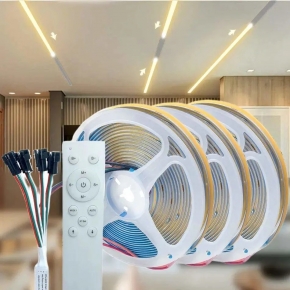
COB LED strips with a 180° beam angle are ideal for indirect ceiling lighting. They create a smooth glow across the ceiling without obvious bright spots.
Kitchen Cabinet Lighting
Under-cabinet lighting requires even illumination across countertops. A wider beam angle helps reduce dark areas and improves visibility.
Bedroom Accent Lighting
Behind beds, mirrors, or wall panels, soft lighting creates a comfortable and relaxing environment.
Display and Retail Lighting
For shelves and product displays, uniform light coverage helps highlight objects without harsh shadows.
Does a 180° Beam Angle Mean More Brightness?
Not necessarily.
Beam angle affects how light is distributed, not simply how much light is produced.
A 120° LED strip may appear brighter in one concentrated area because the light is more focused. A 180° COB LED strip spreads the same amount of light over a wider area, creating a softer appearance.
For interior decoration, wider light distribution is often preferred because it creates a more premium and comfortable visual experience.
COB LED Strips Provide Better Visual Quality
One of the biggest advantages of COB LED strips is not only the wider beam angle but also the improved visual quality.
Traditional LED strips can sometimes create a “dotted” effect because individual LED chips are visible. This can become a problem when the strip is installed in exposed locations.
COB LED strips create a continuous line of light, making them suitable for:
· Modern homes
· Luxury apartments
· Hotels
· Restaurants
· Office interiors
For projects that require clean lighting aesthetics, choosing a well-designed COB LED strip with proper optical performance is essential.
Manufacturers with professional LED production experience, such as LEDWAY, focus on improving light consistency, PCB design, and LED performance to meet different residential and commercial lighting requirements.
How to Choose Between 180° and 120° LED Strips
When selecting an LED strip, consider the installation environment.
Choose a 180° COB LED strip if you need:
· Smooth and dot-free lighting
· Wide light coverage
· Soft ambient illumination
· Premium interior appearance
· Indirect lighting effects
A 120° traditional LED strip may be suitable for:
· Basic decorative projects
· Hidden installations
· Applications with diffusers
· Projects where cost is the main consideration
The installation method also matters. Even a high-quality LED strip will not perform well if the power supply, mounting method, or heat management is not appropriate.
Tips for Getting the Best Lighting Effect from COB LED Strips
To maximize the benefits of a 180° beam angle:
Use the Correct Installation Distance
The distance between the LED strip and the illuminated surface affects the final appearance. More space usually creates a softer lighting effect.
Consider Aluminum Profiles
Aluminum channels improve heat dissipation and provide a cleaner installation finish.
Choose the Right Color Temperature
· 2700K–3000K: Warm and relaxing
· 4000K: Natural and balanced
· 6000K: Bright and modern
Select Reliable LED Products
Beam angle performance depends on LED chip quality, PCB design, and manufacturing standards. Choosing a professional supplier helps ensure consistent lighting results.
Final Thoughts
Beam angle is an important factor when choosing LED strip lights, especially for modern interior applications. Traditional 120° LED strips can work well in many situations, but COB LED strips with a 180° beam angle provide wider coverage, smoother illumination, and a more premium appearance.
For homeowners, designers, and businesses looking to create elegant lighting environments, COB LED technology offers a better balance between aesthetics and performance.
For professional COB LED strip solutions, customized lighting projects, or product inquiries, contact LEDWAY:
Email: sales2@ledwaylighting.com

High Quality Assurance Professional choice factory supply.

Excellent public repution reassured purchasing

Professional design Personalized lighting product idea design

Fast sample making | fast proofingSamples can be made within 48 hours
About
SHENZHEN LEDWAY LIGHTING CO.,Ltd is a manufacturer which integrating R&D, manufacture and sales. Current factory area is 1800 ㎡, 5 high spend SMT machines, 2 reflow soldering machines, 5 production lines, 80 skilled workers as well as the professional R&D team, sales and service team...
In the past 10 years, LEDway focuses on led strip, such as DC&HV strip, COB&SMD strip, neon led strip, have rich-experience in led strip area. In recent year, with strong R&D ability, we also have developed led cabinet light, sensor night light, atmosphere light. Hot selling in Americas and European market. Most of our products have passed CE ROHS, ETL, GS, KC..
Contacts
-
- Address
- The 5rd floor, factory building, Jianghai industrial Park, Yonghe road No. 7, Shiyan street, Baoan district, Shenzhen, China.
-
- jelly@ledwaylighting.com
-
- We are open
- Mon-Fri: 08:00 - 18:00