COB vs. Traditional LED Strips: What’s the Difference?
LED strip lights have become one of the most popular lighting solutions for modern homes, offices, retail stores, and creative spaces. Their flexibility, energy efficiency, and easy installation make them suitable for almost any environment.
However, as LED technology continues to evolve, a new generation of lighting products has gained attention: COB LED strips.
Many people are now asking: What is the difference between COB LED strips and traditional LED strips? Which one provides better lighting performance?
While both options use LED technology, their internal design, light output, appearance, and ideal applications are quite different.
This guide will explain the key differences between COB and traditional LED strips to help you choose the right solution for your project.
What Are Traditional LED Strips?
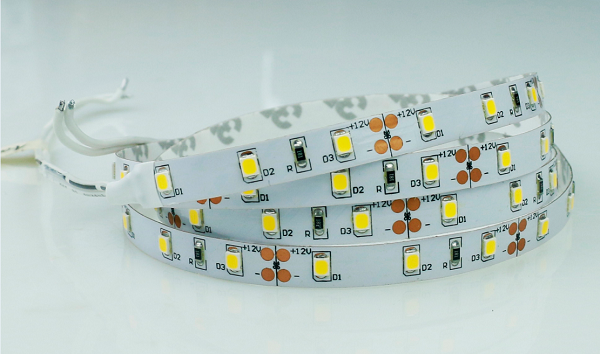
Traditional LED strips usually refer to LED strips that use SMD (Surface Mounted Device) LED technology.
In this design, individual LED packages are mounted onto a flexible printed circuit board (PCB). Each LED works as a separate light source, and the LEDs are arranged at specific intervals along the strip.
Common types include:
2835 LED strips
3528 LED strips
5050 LED strips
Traditional LED strips have been widely used for many years because they are affordable, reliable, and available in many different specifications.
Typical applications include:
Home decoration
Cabinet lighting
Advertising signs
Ceiling lighting
DIY projects
What Are COB LED Strips?
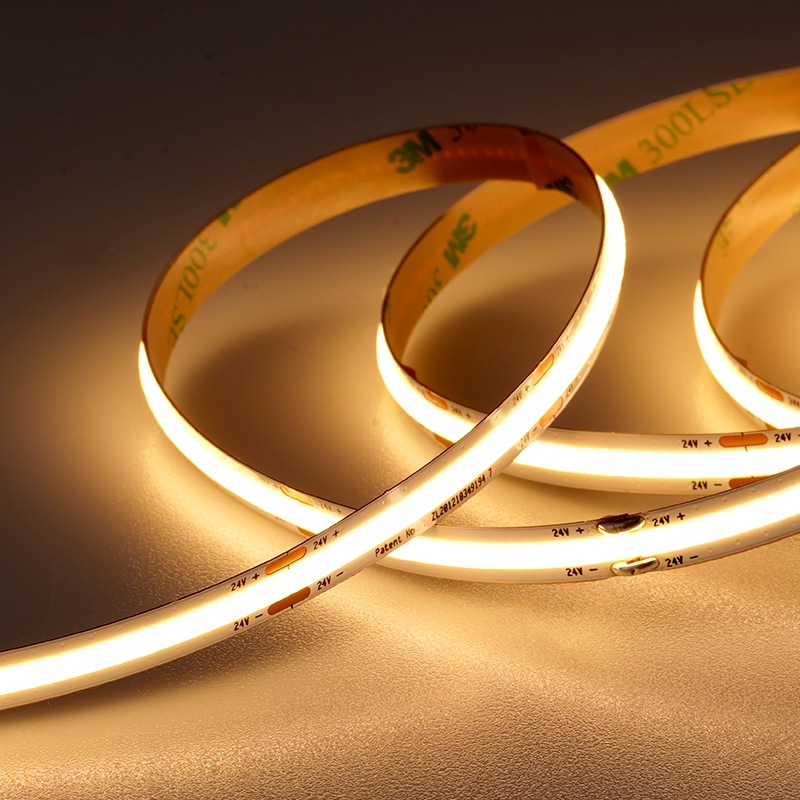
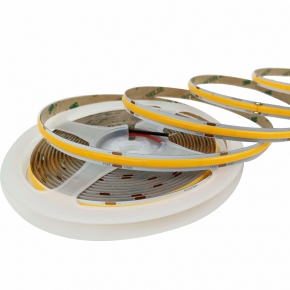
COB stands for Chip on Board.
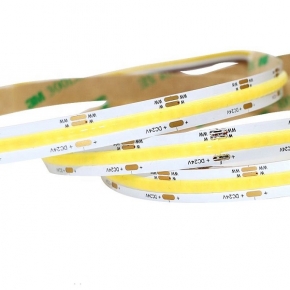
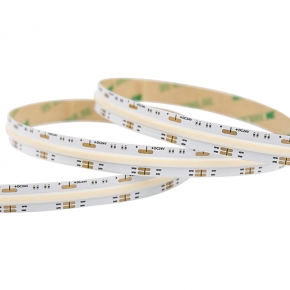
Unlike traditional LED strips that use separate LED packages, COB technology mounts many tiny LED chips directly onto the circuit board.
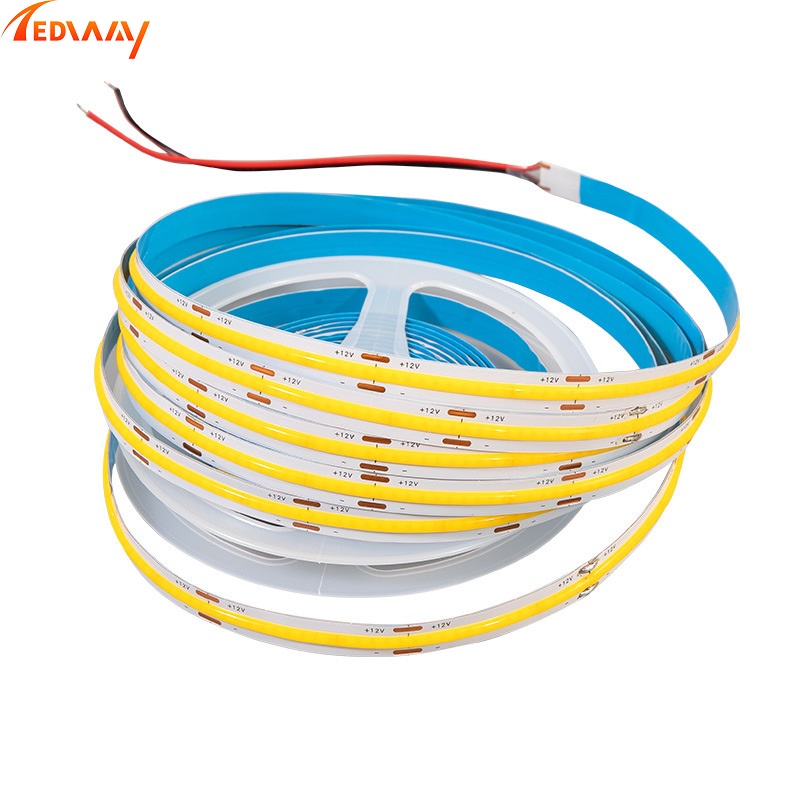
These chips are placed extremely close together, allowing them to work as one continuous light source.
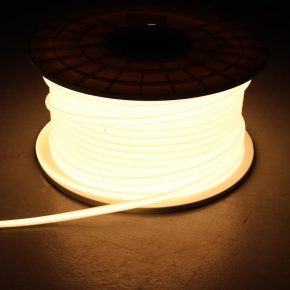
The result is a smoother and more uniform lighting effect without visible LED dots.
COB LED strips are especially popular in applications where the light source itself is visible and appearance matters.
COB vs Traditional LED Strips: Key Differences
1. Light Appearance: Dot-Free vs Visible LED Points
The biggest difference between COB and traditional LED strips is the visual effect.
Traditional LED Strips
Because individual LED chips are separated, traditional strips often create a dotted appearance when viewed directly.
To achieve a smoother effect, users usually need:
Aluminum channels
Diffusers
Covers
COB LED Strips
COB technology places thousands of small chips closely together, creating continuous illumination.
Advantages include:
No visible LED dots
Smoother light output
More professional appearance
This makes COB LED strips ideal for visible installations such as shelves, mirrors, furniture, and decorative lighting.
2. LED Density and Brightness Consistency
LED density refers to how many LED chips are placed on each meter of strip.
Traditional LED strips usually have larger gaps between LEDs.
COB LED strips use a much higher chip density, which creates:
More even brightness
Reduced dark areas
Better color uniformity
For projects where lighting quality is a priority, higher density can significantly improve the final result.
3. Design and Installation Flexibility
Both COB and traditional LED strips are flexible, but COB technology offers some advantages.
Because COB LED strips produce smooth light directly from the strip surface, they can often be installed without additional diffusers.
This is useful for:
Narrow spaces
Curved surfaces
Minimalist interior designs
Traditional LED strips may require extra accessories to achieve the same visual effect.
4. Heat Management and Lifespan
Heat management is an important factor in LED performance.
Traditional LED strips rely on individual LED packages mounted on the PCB.
COB LED strips place chips directly onto the board, allowing heat to spread more efficiently across the circuit.
A well-designed COB LED strip with proper installation can provide:
Stable brightness
Better reliability
Longer operating life
Of course, product quality, PCB materials, and power supply design also play important roles.
5. Energy Efficiency
Both COB and traditional LED strips are energy-efficient compared with conventional lighting technologies.
However, COB LED strips can achieve excellent brightness performance because many small chips work together efficiently.
The actual energy consumption depends on:
LED chip quality
Power density
Brightness requirements
Product design
Choosing the right LED strip specification is more important than simply choosing the newest technology.
COB vs Traditional LED Strip Comparison Table
| Feature | COB LED Strip | Traditional LED Strip |
|---|---|---|
| Technology | Chip on Board | SMD LED |
| Light Effect | Smooth, dot-free | Visible LED points |
| LED Density | Very high | Medium |
| Appearance | Premium and seamless | Standard |
| Installation | Simple visible installation | May need diffuser |
| Flexibility | Excellent | Good |
| Cost | Usually higher | More affordable |
| Best For | High-end lighting projects | General applications |
Which LED Strip Is Better for Different Applications?
There is no single answer because the best choice depends on your project.
Choose COB LED Strips For:
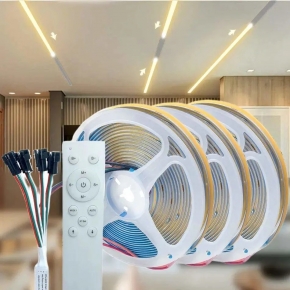
Modern Home Interiors
COB strips work well for:
Kitchen cabinets
Bedroom ambient lighting
TV background lighting
Wardrobes
Stair decoration
The smooth glow creates a cleaner and more comfortable atmosphere.
Commercial Displays
Retail stores, hotels, and restaurants often require high-quality lighting effects.
COB LED strips can help create:
Premium product displays
Elegant architectural details
Better customer experiences
Visible Lighting Designs
If the LED strip will be directly visible, COB technology usually provides a better appearance.
Examples:
Floating shelves
Mirrors
Furniture edges
Decorative walls
Choose Traditional LED Strips For:
Traditional LED strips remain a good choice for:
Budget projects
Hidden lighting installations
Large-scale decorative applications
General illumination
They are affordable and widely available, making them suitable for many everyday uses.
Are COB LED Strips Worth the Extra Cost?
COB LED strips usually cost more than traditional LED strips because of their advanced manufacturing process and higher LED density.
However, the additional cost can be worthwhile when:
The light source is visible
Appearance is important
You want a premium lighting effect
You want fewer installation accessories
For professional lighting projects, many users focus not only on price but also on consistency, reliability, and long-term performance.
Experienced LED manufacturers, such as LEDWAY, continue developing COB LED strip solutions designed for different applications, helping customers achieve better lighting results with improved quality control and product consistency.
How to Choose Between COB and Traditional LED Strips?
Before making a decision, consider these questions:
Will the LED strip be visible?
Yes → COB is usually the better option
No → Traditional LED strips may be sufficient
Is appearance more important than cost?
Premium design → COB LED strip
Basic lighting → Traditional LED strip
Do you need smooth, professional lighting?
Yes → COB technology provides better results
Is it a large-scale project?
Consider factors such as:
Installation environment
Brightness requirements
Power supply
Operating time
Final Thoughts
The difference between COB and traditional LED strips comes down to design, lighting quality, and application needs.
Traditional LED strips are reliable, affordable, and suitable for many basic projects. COB LED strips, on the other hand, provide a smoother, more modern lighting experience with their high-density chip design and dot-free appearance.
For homeowners, designers, and businesses looking for premium lighting effects, COB technology offers a significant upgrade.
When selecting LED strip lights, choosing a reliable supplier with strong manufacturing experience is just as important as choosing the right technology.
For professional COB LED strip light solutions and customized LED lighting support, please contact LEDWAY:
Email: sales2@ledwaylighting.com

High Quality Assurance Professional choice factory supply.

Excellent public repution reassured purchasing

Professional design Personalized lighting product idea design

Fast sample making | fast proofingSamples can be made within 48 hours
About
SHENZHEN LEDWAY LIGHTING CO.,Ltd is a manufacturer which integrating R&D, manufacture and sales. Current factory area is 1800 ㎡, 5 high spend SMT machines, 2 reflow soldering machines, 5 production lines, 80 skilled workers as well as the professional R&D team, sales and service team...
In the past 10 years, LEDway focuses on led strip, such as DC&HV strip, COB&SMD strip, neon led strip, have rich-experience in led strip area. In recent year, with strong R&D ability, we also have developed led cabinet light, sensor night light, atmosphere light. Hot selling in Americas and European market. Most of our products have passed CE ROHS, ETL, GS, KC..
Contacts
-
- Address
- The 5rd floor, factory building, Jianghai industrial Park, Yonghe road No. 7, Shiyan street, Baoan district, Shenzhen, China.
-
- jelly@ledwaylighting.com
-
- We are open
- Mon-Fri: 08:00 - 18:00