How Do COB LED Strip Lights Work? Tech Explained Simply
LED strip lights have become one of the most popular lighting solutions for homes, businesses, and creative projects. From kitchen cabinets and ceiling decoration to commercial displays and architectural lighting, flexible LED strips make it easier than ever to add beautiful illumination almost anywhere.
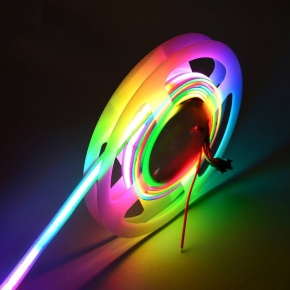
Among the latest developments in LED technology, COB LED strip lights have gained significant attention because of their smooth, continuous light output and advanced design.
But how exactly do COB LED strip lights work? What makes them different from traditional LED strips? In this guide, we will explain the technology behind COB LED strips in simple terms and help beginners understand why they are becoming a preferred choice for modern lighting applications.
What Is a COB LED Strip Light?
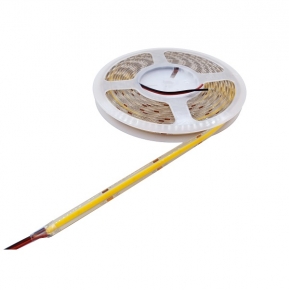
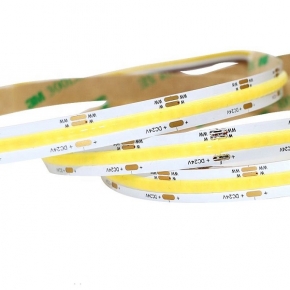
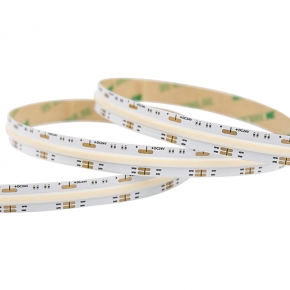
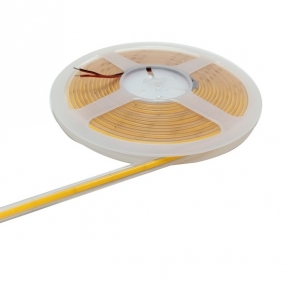
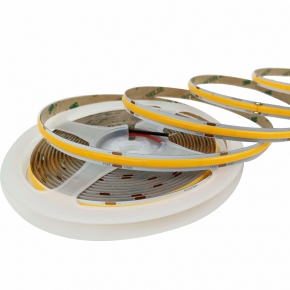
COB stands for Chip on Board, which is an advanced LED packaging technology where multiple LED chips are directly mounted onto a flexible circuit board.
Unlike traditional SMD LED strips, where individual LED components are placed separately with visible gaps between each light source, COB technology arranges many tiny LED chips closely together on the PCB.
This creates a continuous lighting surface that produces a smooth, uninterrupted beam of light.
Simply explained:
Traditional LED strip = many small LED bulbs placed separately
COB LED strip = many tiny LED chips combined together as one continuous light source
This design is the main reason COB LED strips can achieve a dot-free lighting effect.
How Do COB LED Strip Lights Actually Work?
The working principle of a COB LED strip is based on the interaction between semiconductor LED chips, electrical circuits, and heat management.
Here is the process step by step.
1. Electrical Current Powers the LED Chips
When a COB LED strip is connected to a suitable power supply, electrical current flows through the flexible PCB circuit.
The PCB acts as the pathway that delivers electricity evenly to thousands of tiny LED chips mounted on its surface.
Each LED chip converts electrical energy into visible light through a process called electroluminescence.
2. Multiple LED Chips Create One Uniform Light Source
The biggest difference between COB and traditional LED technology is how the LED chips are arranged.
In a standard LED strip, each LED package works as an individual light point. Because there is space between LEDs, you can often see bright spots and darker areas.
With COB technology, hundreds or even thousands of tiny LED chips are densely arranged together.
The light from each chip overlaps with the surrounding chips, creating:
Smooth brightness
No visible LED dots
Better color consistency
More professional appearance
This is why COB LED strips are often used in places where the light source itself is visible.
Why Do COB LED Strips Have No Visible Dots?
The dot-free effect is one of the biggest advantages of COB LED strip lights.
Traditional LED strips may require a diffuser cover or aluminum profile to hide LED points. Without additional accessories, individual LEDs can easily be seen.
COB LED strips solve this problem by reducing the distance between LED chips.
The extremely high LED density allows light to blend naturally before reaching the human eye.
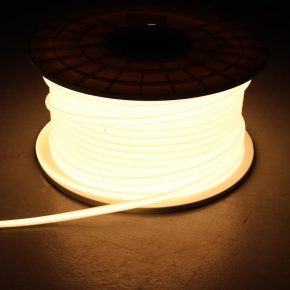
As a result, COB LED strips can create a similar effect to neon lighting while maintaining the flexibility and efficiency of LED technology.
The Technology Behind COB LED Strip Construction
A COB LED strip mainly consists of several key components:
1. Flexible PCB Board
The PCB provides mechanical support and electrical connections for the LED chips.
High-quality PCB materials help improve:
Current stability
Heat dissipation
Product lifespan
2. LED Chips
The tiny semiconductor chips are the actual light-producing components.
The quality, quantity, and arrangement of these chips directly influence:
Brightness
Color accuracy
Energy efficiency
3. Phosphor Coating
A phosphor layer is applied over the LED chips to convert blue LED light into different color temperatures.
This determines whether the strip produces:
Warm white light
Natural white light
Cool white light
High-quality phosphor technology helps maintain better color consistency.
4. Protective Layer
Many COB LED strips include protective coatings to improve durability.
Depending on the application, manufacturers may offer:
Non-waterproof versions for indoor use
Silicone-coated versions for humid environments
Waterproof versions for outdoor applications
COB LED Strip vs SMD LED Strip: Which Is Better?
Both COB and SMD LED strips have their advantages, but they serve different needs.
| Feature | COB LED Strip | SMD LED Strip |
|---|---|---|
| Light Effect | Smooth and dot-free | Visible LED points |
| LED Density | Very high | Medium |
| Appearance | More premium | Traditional |
| Flexibility | Excellent | Good |
| Best Use | Decorative and visible installations | General lighting |
For projects where the lighting strip will be directly visible, COB technology usually provides a cleaner and more modern appearance.
Advantages of COB LED Strip Lights
1. Seamless Lighting Appearance
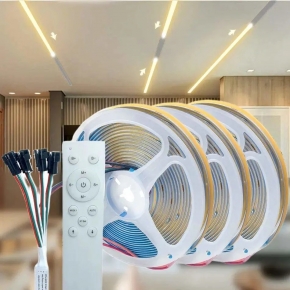
The continuous glow makes COB LED strips ideal for modern interior designs where lighting quality matters.
Popular applications include:
Under cabinet lighting
Bedroom ambient lighting
Mirror lighting
Furniture decoration
Display shelves
2. Better Visual Comfort
Because COB LED strips eliminate strong individual light points, they can create a softer and more comfortable lighting environment.
This is especially important for residential spaces where people spend long periods under artificial lighting.
3. Flexible Installation
COB LED strips can be installed in narrow spaces, curved surfaces, and creative designs.
Their flexibility makes them suitable for both DIY projects and professional lighting installations.
4. Professional Lighting Quality
For commercial environments such as hotels, restaurants, and retail stores, consistent lighting can influence the overall customer experience.
Many professional lighting suppliers focus on COB technology because it provides a cleaner appearance compared with basic LED strips.
Manufacturers with strong experience in LED production, such as LEDWAY, continue improving COB LED strip solutions by focusing on brightness consistency, reliability, and different application requirements.
Where Are COB LED Strip Lights Commonly Used?
COB LED strips are widely used in:
Residential Lighting
Kitchen cabinets
Living rooms
Bedrooms
Stairways
Closets
Commercial Lighting
Retail displays
Hotels
Restaurants
Exhibition spaces
Creative Projects
DIY furniture lighting
Vehicle decoration
Custom interior designs
Architectural details
How to Choose a Quality COB LED Strip Light?
When selecting a COB LED strip, beginners should pay attention to several important factors.
Check LED Density
Higher LED density usually means smoother lighting and fewer visible imperfections.
Consider Color Quality
Look for information about:
Color temperature
Color rendering index (CRI)
Color consistency
Choose the Right Power Supply
A reliable power supply is essential for stable operation and longer lifespan.
Consider Heat Management
Although LEDs are energy efficient, heat still affects performance. Quality PCB design and proper installation can improve durability.
Are COB LED Strip Lights the Future of Flexible Lighting?
COB LED strip technology represents a major improvement in flexible LED lighting.
By combining high-density LED chips with advanced circuit design, COB strips provide a balance of:
Smooth illumination
Energy efficiency
Flexible installation
Modern appearance
For homeowners, designers, and businesses looking for premium lighting effects, COB LED strips offer a simple way to achieve professional results.
As LED technology continues to develop, COB solutions are expected to become even more common in residential and commercial lighting projects.
Understanding how COB LED strip lights work helps you make better decisions when choosing lighting products.
The secret behind COB technology is simple: many tiny LED chips work together on a single board to create one smooth and powerful light source.
Compared with traditional LED strips, COB LED strips provide better visual quality, cleaner installation results, and a more modern lighting experience.
When selecting a COB LED strip supplier, product quality, manufacturing experience, and technical support are just as important as price. Choosing a reliable lighting partner can help ensure better performance for both small DIY projects and large commercial installations.
For professional COB LED strip light solutions and customized lighting support, please contact LEDWAY:
Email: sales2@ledwaylighting.com

High Quality Assurance Professional choice factory supply.

Excellent public repution reassured purchasing

Professional design Personalized lighting product idea design

Fast sample making | fast proofingSamples can be made within 48 hours
About
SHENZHEN LEDWAY LIGHTING CO.,Ltd is a manufacturer which integrating R&D, manufacture and sales. Current factory area is 1800 ㎡, 5 high spend SMT machines, 2 reflow soldering machines, 5 production lines, 80 skilled workers as well as the professional R&D team, sales and service team...
In the past 10 years, LEDway focuses on led strip, such as DC&HV strip, COB&SMD strip, neon led strip, have rich-experience in led strip area. In recent year, with strong R&D ability, we also have developed led cabinet light, sensor night light, atmosphere light. Hot selling in Americas and European market. Most of our products have passed CE ROHS, ETL, GS, KC..
Contacts
-
- Address
- The 5rd floor, factory building, Jianghai industrial Park, Yonghe road No. 7, Shiyan street, Baoan district, Shenzhen, China.
-
- jelly@ledwaylighting.com
-
- We are open
- Mon-Fri: 08:00 - 18:00